

Freshwater, Greywater & Blackwater Systems Explained
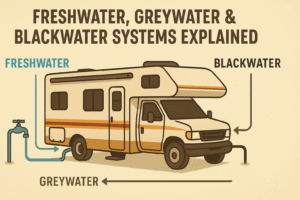
Understanding your RV’s water systems is one of the most important parts of confident RV ownership. Whether you’re a full-timer, a weekend traveler, or visiting Cape Kennedy RV Resort for a Florida getaway, knowing how freshwater, greywater, and blackwater systems work will make your stay easier, safer, and a whole lot cleaner. These three systems handle everything from clean drinking water to wastewater management, and each one plays a unique role in keeping your RV functioning smoothly.
Your freshwater system is the one that supplies clean, potable water to your faucets, shower, and toilet. This is the system that pulls water from either the onboard fresh tank or a city water hookup. At Cape Kennedy RV Resort, most guests choose to use the city water connection because it provides consistent pressure and endless supply, but many RVers still keep some water in their fresh tank for traveling or emergency use.
Inside the RV, your freshwater system is pressurized by either the onboard pump (when using the tank) or by the pressure at the campground spigot. A good pressure regulator is essential because it protects your RV’s internal plumbing from high water pressure that can damage seals, fittings, or appliances. Carrying a drinking-safe hose and filter also ensures your water supply stays clean and taste-free during your stay.
Greywater is the wastewater that drains from your sinks and shower. While it isn’t sewage, it does contain soap, food particles, grease, and bacteria. Your grey tank fills slowly over the course of daily use and must be emptied regularly. Many RVers underestimate how quickly a grey tank fills, especially during long showers or when washing dishes frequently. At a resort like Cape Kennedy, where guests often stay for extended periods, monitoring tank levels is essential to avoid backups.
One of the advantages of greywater is that it can typically be left open and free-flowing into the sewer hookup at your site. However, there are times when you might want to keep it closed—such as the day before dumping your black tank—so you have enough greywater stored to thoroughly flush the sewer hose afterward. This simple habit keeps your equipment cleaner and makes dumping more efficient.
Blackwater, on the other hand, contains waste from the toilet. This tank requires more care and respect than the grey tank. Since black tanks rely on gravity and water volume to properly empty, leaving the valve open at your campsite is never recommended. Doing so allows liquids to drain out while solids remain behind, creating clogs or “pyramids” that are extremely difficult to remove. Keeping your black valve closed until the tank is at least two-thirds full helps ensure a strong, complete flush.
Inside the black tank, breakdown chemicals or enzyme treatments are often used to help dissolve waste and reduce odor. While not all products are necessary, many RVers find that a high-quality tank treatment keeps things fresher and prevents build-up. At Cape Kennedy RV Resort, where warm Florida temperatures can intensify odors, using the right treatment can make a big difference.
Every RV water system also relies on proper ventilation. Your roof vents allow gases to escape from your tanks instead of building pressure inside them. If you ever experience sewer smells inside your RV, venting, seals, or P-traps are often the first things to check. A properly functioning vent system keeps your RV smelling clean and comfortable no matter how long your stay.
Dumping your tanks correctly is another essential skill. The golden rule is simple: dump black first, then grey. This ensures that the soapy greywater helps rinse out the hose after the black tank has emptied. Whether you’re using your full hookup site at Cape Kennedy or stopping at a dump station during travel, keeping your equipment clean, sealed, and properly connected protects both you and the campground.
Your freshwater, greywater, and blackwater systems all require routine maintenance. Freshwater lines should be sanitized several times a year, while grey and black tanks should be flushed thoroughly whenever possible. Checking seals, inspecting connections, and replacing worn hoses helps avoid leaks and costly repairs. A little maintenance goes a long way toward keeping your RV systems reliable.
Knowing how these systems work not only protects your RV—it makes your stay far more enjoyable. Freshwater systems give you comfort, greywater systems manage your daily usage, and blackwater systems keep sanitation under control. When you understand and respect how they operate, RV life becomes smoother and more predictable.
At Cape Kennedy RV Resort, we strive to provide clean, safe water hookups and well-maintained sewer connections at every site. Combined with your own knowledge and good practices, managing your RV’s water systems becomes simple and stress-free. With everything functioning properly, you can relax and enjoy your time on Florida’s Space Coast—whether you’re watching rocket launches, visiting the beach, or simply soaking in the sunshine.
📍 4513 St Rd 46, Mims, FL
For any questions or concerns please reach out to us
📞 (321) 269-7361