

Preventing Mold & Moisture Inside Your RV
Moisture is one of the most persistent challenges RVers face, especially in warm, humid environments like Florida’s Space Coast. At Cape Kennedy RV Resort, guests enjoy sunshine, ocean breezes, and beautiful weather—but the same climate that makes the area so enjoyable can also create ideal conditions for mold and moisture buildup inside your RV. Understanding how humidity affects your rig and learning how to control it will keep your RV cleaner, healthier, and far more comfortable.
One reason moisture control is so important is because RVs are small, enclosed spaces. Everyday activities like cooking, showering, and even breathing create moisture in the air. Without proper ventilation, that moisture settles onto surfaces, upholstery, mattresses, and walls. Over time, this can lead to mold, mildew, and musty odors that are hard to remove once they take hold.
Warm air naturally holds more moisture, and Florida’s climate accelerates condensation inside RVs. When humid air meets cooler surfaces—such as windows, walls, or cabinets—water droplets form. This condensation becomes the perfect breeding ground for mold. Preventing those conditions is the key to keeping your RV’s interior fresh and sanitary throughout your stay.
The first line of defense is ventilation. Simply letting air circulate can dramatically reduce interior humidity. Whenever you cook or shower, run your exhaust fans to pull moisture out of the air before it settles. Many RVers also crack a window while using the air conditioner, allowing humid indoor air to exit while cool, dry air replaces it. The goal is steady, controlled airflow that prevents moisture from being trapped inside.
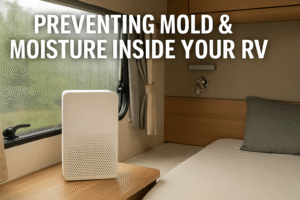
Dehumidifiers are another excellent tool for RV life, especially in Florida. A small electric dehumidifier can pull pints—or even gallons—of water from the air each day. Many guests at Cape Kennedy RV Resort use dehumidifiers during the summer and rainy months to maintain comfortable humidity levels indoors. If you don’t have space for a full unit, moisture-absorbing crystals or hanging desiccant bags also help.
Air conditioning also plays a major role in moisture control. Beyond cooling your RV, your AC unit removes humidity from the air. Keeping your AC at a reasonable and consistent temperature prevents moisture from settling on surfaces. Short, intermittent cooling cycles can cause humidity to fluctuate, so steady operation is more effective than frequent on-off bursts.
Another important practice is managing your windows and seals. If window seals or slide-out gaskets allow outside humidity to creep in, your RV interior will constantly fight moisture. Inspecting seals regularly and repairing cracks or gaps keeps humid air out and cool, conditioned air in. Window insulation film or reflective shades can also help reduce condensation on cooler surfaces.
Moisture often accumulates in overlooked areas like closets, under beds, and behind furniture. These spots receive minimal airflow, making them prime environments for mold growth. Placing moisture absorbers in these enclosed spaces helps prevent build-up, and periodically opening cabinet doors allows air to circulate throughout the RV.
One of the biggest contributors to excess moisture inside RVs is wet gear—especially towels, swimsuits, and rain-soaked clothing. Instead of drying them inside the RV, hang them outdoors or use a drying rack under your awning. Preventing wet items from sitting inside eliminates a significant amount of interior humidity and helps keep the RV smelling fresh.
Cooking also creates steam, which quickly raises humidity levels. Using the stove’s range hood vent—or cooking outdoors when possible—reduces moisture dramatically. Even boiling water can cause condensation inside a small RV, so running your vent fan makes a huge difference during meal preparation.
Checking for plumbing leaks is another key step. Even a slow drip from a faucet, water heater, or pipe fitting can introduce constant moisture into your RV. Checking under sinks, around toilets, and near water connections helps catch leaks early before they lead to mold or structural damage.
Flooring and carpeting can also trap moisture, especially if humidity levels remain high. Many RVers use washable throw rugs instead of wall-to-wall carpet, making it easier to control moisture and prevent odors. Regularly airing out bedding and cushions also helps remove trapped humidity that builds up over time.
By taking proactive steps to manage moisture, you can prevent mold before it starts and keep your RV clean, healthy, and comfortable. At Cape Kennedy RV Resort, where guests enjoy long-term stays and warm Florida weather, moisture management becomes a simple but essential part of RV living. With good ventilation, regular maintenance, and the right tools, you can enjoy your time on the Space Coast without ever worrying about mold inside your rig.
📍 4513 St Rd 46, Mims, FL
For any questions or concerns please reach out to us
📞 (321) 269-7361