

RV Weight & Towing Basics: GVWR, Tongue Weight, and Safe Hauling
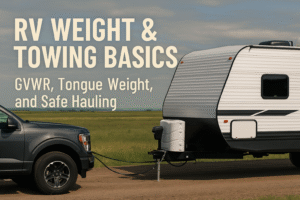
Understanding RV weight and towing safety is one of the most important parts of RV ownership—even more important than many new travelers realize. At Cape Kennedy RV Resort, we see a wide variety of rigs come and go, and one thing is certain: towing smart keeps you safer on the road and protects your RV investment. Learning how GVWR, tongue weight, and load management work can prevent accidents, reduce wear on your vehicle, and give you confidence during every trip.
One of the first concepts every RVer should understand is GVWR, or Gross Vehicle Weight Rating. This number represents the maximum allowable weight of your towable RV or motorhome when fully loaded. It includes everything—water, propane, food, gear, passengers, and accessories. GVWR is established by the manufacturer and should never be exceeded. Staying within this limit protects your axles, frame, brakes, and tires.
For towable RVs like travel trailers or fifth wheels, GCWR (Gross Combined Weight Rating) also comes into play. GCWR is the maximum weight of your tow vehicle and RV together when fully loaded. Many drivers underestimate how easily cargo adds up, especially before long trips to destinations like Florida’s Space Coast. Staying within these weight ratings helps prevent engine strain, brake failure, and dangerous handling on the highway.
Tongue weight is another essential part of safe towing. This is the downward force the trailer places on the hitch of your tow vehicle. Proper tongue weight ensures stability, reducing swaying and fishtailing. Too little tongue weight causes the trailer to wander or sway at high speeds. Too much can overload the rear axle of your tow vehicle and make steering more difficult. The ideal tongue weight is generally between 10% and 15% of the trailer’s total weight.
Weight distribution is also important. Even if your total weight is within limits, improperly loaded cargo can lead to dangerous handling conditions. Heavy items should always be stored low and toward the front of the trailer. Overloading one side or placing too much weight in the rear can cause uneven tire wear, axle damage, and poor control when turning or braking. A properly balanced RV feels smoother, safer, and more predictable on the road.
Tire ratings are another critical factor. Each tire on your tow vehicle and RV has a maximum load capacity. Exceeding these limits is a common cause of blowouts—especially in warmer climates like Florida. Before heading to Cape Kennedy RV Resort or any long-distance destination, knowing the total weight your tires are carrying ensures safer travel and longer tire life.
Braking systems also play a major role in towing safety. Most towable RVs require electric trailer brakes, which must be properly adjusted to match the weight of your trailer and your driving conditions. A well-calibrated brake controller syncs the stopping power between your tow vehicle and your RV, reducing stress on your vehicle’s brakes and improving stopping distance.
Tow capacity is another area where new RVers often get confused. Just because a truck or SUV can pull a certain amount doesn’t mean it can safely tow that weight once cargo, passengers, and hitch equipment are added. Your tow vehicle’s owner manual lists exact tow ratings, payload limits, and hitch specifications. Following these numbers—not guesses or online assumptions—is crucial for safe travel.
Hitch selection is equally important. Weight-distribution hitches, sway control bars, and fifth-wheel hitches are designed to improve stability and reduce wear on your tow vehicle. Choosing the right hitch ensures smoother handling, better braking, and a safer experience on the road. For longer hauls to places like Cape Kennedy RV Resort, the added stability is well worth it.
Another factor to consider is water weight. Freshwater tanks add significant bulk—often several hundred pounds when full. If you’re traveling long distances, it’s usually safer to fill your tank once you arrive rather than carrying unnecessary extra weight. Knowing when to travel with full vs. empty tanks can make a big difference in how your RV handles.
Speed also affects towing safety. Higher speeds increase heat buildup in tires, reduce reaction time, and amplify sway. Many experienced RVers agree that keeping speeds between 60 and 65 mph offers the best balance of safety, fuel efficiency, and control. Slowing down may add a few minutes to your trip, but it dramatically reduces the risk of accidents.
Regular weighing is one of the smartest habits an RVer can develop. Many truck stops and RV rallies offer weigh stations where you can check each axle’s weight individually. This detailed information helps identify imbalances or overloads that might otherwise go unnoticed. A well-balanced RV is safer, smoother, and easier on tires, brakes, and suspension.
Mastering RV weight and towing basics gives you peace of mind and makes every trip more enjoyable. Whether you’re traveling locally or making a long journey to Cape Kennedy RV Resort, understanding GVWR, tongue weight, and safe hauling practices ensures a safe, smooth, and stress-free adventure. With the right knowledge and preparation, you can focus on what matters most—enjoying Florida’s Space Coast and the incredible experiences that come with RV travel.
📍 4513 St Rd 46, Mims, FL
For any questions or concerns please reach out to us
📞 (321) 269-7361