

How Elevation Changes Affect RV Performance, Fuel Use, and Cooling Systems
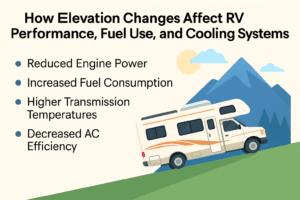
Most RVers think about weather, roads, and fuel—but elevation changes are one of the most overlooked factors that can significantly impact how your RV performs. Even though Florida sits at a low elevation, many travelers heading to Cape Kennedy RV Resort begin their journeys in mountainous or high-altitude regions, and those elevation differences can dramatically influence fuel efficiency, engine performance, and cooling systems.
The most immediate effect of climbing to higher elevations is reduced engine power. The higher you go, the thinner the air becomes. Gas and diesel engines depend on oxygen for combustion, and with less oxygen available, the engine can’t generate its usual power. RVers often notice slower acceleration, more strain on uphill climbs, and increased downshifting while navigating mountains.
Another major variable is fuel consumption. At higher elevations, your engine works harder, climbs require more throttle, and long stretches of steep grades demand more engine output. This naturally leads to higher fuel usage. For motorhomes and tow vehicles—especially those pulling heavy fifth wheels or large travel trailers—the difference in MPG can be substantial. Planning fuel stops accordingly is essential for long-distance trips.
Turbocharged engines tend to perform better at high altitudes because turbos force more air into the engine, partially offsetting oxygen loss. However, even turbocharged systems have limits, and RVers should expect some degree of power reduction. Understanding your rig’s capabilities helps prevent pushing the engine beyond safe limits on steep or prolonged climbs.
Elevation also impacts transmission temperatures. While climbing, transmissions often work harder and generate more heat. Without proper cooling, transmission fluid can break down, leading to long-term wear or sudden overheating. New RVers should always monitor transmission gauges and, when possible, take breaks between long ascents to let the system cool.
Descending from high elevations creates its own challenges. Long downhill stretches require steady braking or engine braking, which increases heat on both the braking system and the engine. Improper descent techniques—such as “riding the brakes”—can cause brake fade, warping, or complete failure. Knowing when to downshift is key to managing these situations safely.
Air density changes can also affect how your RV cooling system performs. In higher altitudes, radiators lose some cooling efficiency because there is less air to dissipate heat. This is especially noticeable in warmer months or when climbing at slow speeds. RVers should always check coolant levels, radiator condition, and fan performance before traveling through elevated areas.
RV air conditioners are also impacted. AC systems work harder at altitude because compressors lose efficiency when air pressure drops. This can result in warmer interior temperatures, slower cooling cycles, and increased electrical draw. While this isn’t a concern at low-altitude destinations like Cape Kennedy, it’s important to understand when traveling through mountains on the way to Florida.
Generator performance can also decrease in high elevations. Most generators lose around 3% of their output for every 1,000 feet of elevation gain. For RVers relying on onboard generators to power air conditioning, microwaves, or appliances, this reduction becomes noticeable at elevations above 5,000 feet. Carburetor adjustments or high-altitude jets may be necessary depending on the model.
Even your tire pressure can be affected by elevation. As you ascend, air inside your tires expands due to pressure changes, sometimes causing overinflation. Conversely, driving back down to sea level—like arriving at Cape Kennedy RV Resort—can reduce pressure and leave tires underinflated. Regular checks during elevation shifts are crucial for safety.
High elevation also influences tow vehicle performance. Trucks towing large RVs experience greater strain on engines, cooling systems, suspensions, and drivetrains. Heavy loads combined with steep grades create conditions that expose weaknesses in older components or poorly maintained equipment.
Understanding how elevation changes affect your RV allows you to plan smarter and travel more confidently. Whether you’re navigating the Rockies, Appalachians, or distant mountain ranges before heading down to Florida’s low-elevation coastline, being aware of these performance factors prevents breakdowns and improves safety.
By the time you roll into Cape Kennedy RV Resort—where sea-level conditions give your RV a break—you’ll appreciate how much of a difference elevation makes. With proper maintenance, realistic expectations, and awareness of how altitude affects your rig, you can enjoy smoother travels and stress-free stays along Florida’s beautiful Space Coast.
📍 4513 St Rd 46, Mims, FL
For any questions or concerns please reach out to us
📞 (321) 269-7361