

Understanding Your RV VIN: How to Decode It and What It Tells You
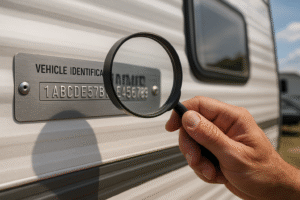
Every RV, from travel trailers to Class A motorhomes, carries a unique Vehicle Identification Number (VIN). This 17-character code acts like the RV’s fingerprint, storing key information about its manufacturer, construction, and history. Whether you’re purchasing a used RV, registering your rig for a seasonal stay at Cape Kennedy RV Resort, or checking for recalls, understanding your VIN can help you learn more about your vehicle than you might expect.
At its core, the VIN identifies where and how the RV was built. The first three characters form the World Manufacturer Identifier, which tells you the country of origin and the company that produced the chassis or trailer. For example, many American-made RVs begin with “1,” while units built in Canada often start with “2.” This helps owners confirm the legitimacy of the manufacturer and avoid fraudulent or misrepresented units.
The next section of the VIN contains the Vehicle Descriptor, which provides information such as the type of RV, its body style, and sometimes details about the frame or chassis. For motorhomes, this portion may reveal whether the RV is built on a Ford, Freightliner, or Mercedes chassis. For towable RVs, it can identify the construction type or series. Knowing this helps ensure you purchase the correct replacement parts and understand the design characteristics of your specific model.
The ninth character is the VIN check digit—a mathematically generated character used to verify the VIN’s authenticity. This prevents scammers from creating false VINs and enables dealerships, insurance companies, and law enforcement to validate the information quickly. If a VIN fails a check-digit test, it’s a warning sign that the vehicle’s history needs closer inspection.
The tenth character identifies the model year, one of the most commonly used parts of the VIN. This letter or number corresponds to a standardized chart that reveals the RV’s production year. Because RVs are sometimes titled as the year they were sold rather than the year they were built, checking the model year from the VIN can prevent confusion when buying or valuing an RV. It also matters for ordering correct components and accessing manufacturer recalls.
The eleventh character indicates the manufacturing plant, revealing which factory produced the unit. For brands with multiple facilities, this information helps determine build variations and understand potential differences in quality control. Some plants specialize in certain layouts or product lines, which can influence the long-term reliability of specific models.
The final six characters make up the production sequence number—essentially the RV’s serial number. This part identifies exactly where your RV fell on the production line. Knowing the sequence can be important when researching recalls, service bulletins, or common issues associated with certain production ranges.
Decoding your VIN is especially helpful when researching an RV’s history. A VIN lookup can reveal accident reports, service records, warranty claims, and potential liens. For buyers considering a pre-owned RV, this information is invaluable and can prevent costly surprises down the road. Even long-term RV owners benefit from periodic VIN checks, especially when upgrading components or confirming the correct specifications.
Some RV owners are surprised to learn that the VIN may not tell the whole story for motorhomes. Because the chassis is often manufactured separately from the RV “house,” certain details—such as interior layout or equipment packages—won’t appear in the VIN. To get full build information, owners often combine VIN decoding with a call to the manufacturer or a search using the RV’s build sheet.
Insurance companies rely heavily on the VIN to properly classify and value your RV. When submitting claims or adjusting coverage before traveling to Cape Kennedy RV Resort, ensuring your VIN is correct prevents delays and ensures accurate replacement-cost calculations. A single digit entered incorrectly can change the entire classification, so double-checking VIN accuracy is always a smart step.
For RVers who plan upgrades, restorations, or full-time living, understanding your VIN also helps when sourcing compatible parts for appliances, suspension systems, slides, and safety components. Many RV parts suppliers use VIN lookups to guarantee proper fit and functionality, saving owners time and frustration.
The VIN isn’t just a number stamped on your RV—it’s a comprehensive code that reveals critical details about its construction, origins, and history. Learning how to decode it empowers RV owners to make smarter maintenance decisions, verify information when buying or selling, and maintain confidence in the structure and safety of their rig.
📍 4513 St Rd 46, Mims, FL
For any questions or concerns please reach out to us
📞 (321) 269-7361