

Understanding Axle Ratings and Why Overloading Damages Your RV Frame
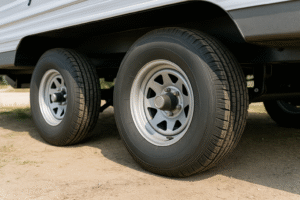
One of the most misunderstood aspects of RV safety is axle ratings. Many RVers focus on cargo capacity, tire ratings, or tow vehicle limits, but the axles under your trailer are the true backbone of its support system. When an RV is overloaded—even slightly—its axles, suspension, and frame take the brunt of the stress. Understanding axle ratings is essential for safe travel and long-term durability, especially for guests arriving at Cape Kennedy RV Resort after long highway trips or seasonal hauls.
Every RV axle is assigned a GAWR — Gross Axle Weight Rating. This is the maximum amount of weight that a single axle is designed to safely support, including the RV’s structure, cargo, tanks, and accessories. Most travel trailers use 3,500 lb, 4,400 lb, 5,200 lb, or 7,000 lb axles, depending on size and construction. When both axles are combined, the allowable load may seem generous, but that capacity drops quickly once tanks, gear, propane, and personal items are added.
Overloading the axles doesn’t just stress the wheels. It creates downward force that the suspension was never engineered to handle. Springs flatten prematurely, equalizers bind, and shackles twist or elongate. These small changes compound over time, causing the trailer to sit lower, ride rougher, and experience more sway while in motion. Many RVers mistakenly blame sway on the hitch or tires when the real culprit is excessive axle load.
The frame is also at risk. RV frames are designed to flex slightly when the trailer travels over bumps, dips, or uneven road surfaces. Overloading increases that flex beyond safe limits, leading to stress cracks, bent crossmembers, and weld failures. Frame damage is one of the most expensive and difficult repairs an RV owner can face, and in extreme cases, insurance may not cover overload-related failures.
Tires are one of the first components to show signs of overloading. A tire may be rated for its own maximum load, but if the axle itself is overloaded, the tires bear more heat and pressure than intended. This often results in blowouts, cupping, rapid tread wear, and dangerous highway failures. Coastal Florida heat only intensifies this risk, as high road temperatures cause already-stressed tires to expand and weaken.
Uneven loading is another hidden factor. Even if the total weight is within limits, too much weight on one side of the trailer can overload a single axle or wheel. Heavy items stored all on one side—such as a full wardrobe, tools, batteries, or water jugs—can shift the center of gravity and create uneven strain. This imbalance can lead to bent axles, premature tire failure, and crooked tracking behind the tow vehicle.
Water tanks are a major contributor to overload without RVers realizing it. A single gallon of water weighs 8.34 pounds, meaning full fresh or waste tanks can add hundreds of pounds instantly. Traveling with full tanks—especially gray or black tanks located behind the axles—dramatically changes axle load distribution and increases frame stress.
Slide-outs can also influence axle stress. When retracted, the weight redistribution can place more force on one axle or corner of the RV. Combined with cargo and tank placement, this can push an axle beyond its safe limit even if the RV’s overall weight appears within spec. Regular weighing is the only reliable way to know how weight is distributed across each axle and wheel.
Installing aftermarket items like additional batteries, generators, cargo racks, or storage boxes may unknowingly push the axles past their limits. Many upgrades add weight behind the axles, which compounds leverage and forces the frame to flex harder. The farther weight is placed from the axles, the more mechanical strain it creates.
The best tool for preventing axle overload is visiting a CAT scale or RV-specific weighing station. Weighing each axle—and ideally each wheel position—gives a precise picture of how weight is distributed. This information allows RVers to rearrange cargo, lighten loads, and correct imbalance before damage occurs.
Maintaining proper axle weight ensures smoother towing, better braking, safer handling, and a longer lifespan for your RV. By respecting GAWR ratings and checking your load regularly, you protect your tires, suspension, and frame from unnecessary strain. For those traveling to or staying at Cape Kennedy RV Resort, understanding axle limits makes every coastal adventure safer and more enjoyable.
📍 4513 St Rd 46, Mims, FL
For any questions or concerns please reach out to us
📞 (321) 269-7361