

Understanding Campground Electrical Load: Why Power Sometimes Drops in Peak Season
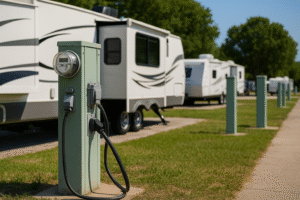
Every RV relies heavily on stable power, especially during Florida’s warmest months. At Cape Kennedy RV Resort, guests enjoy modern hookups, but like all campgrounds, electrical demand can surge during busy seasons. Understanding how campground electrical load works—and why voltage occasionally drops—helps RVers protect their equipment, avoid damage, and manage expectations during peak travel times.
Campground electrical systems are designed to handle a large number of RVs, but every pedestal connects to a shared power grid. When occupancy increases, more rigs draw energy from the same feeders, transformers, and circuits. Just like a neighborhood experiences heavier load during heat waves, a full RV resort experiences higher demand when guests rely on their air conditioners, refrigerators, microwaves, and electric water heaters simultaneously.
Air conditioners are one of the biggest contributors to electrical strain. A single RV AC unit can draw 13–17 amps on startup, and rigs with two or three units multiply that demand quickly. In hot coastal climates, nearly every guest runs AC continuously, creating a collective load that pushes the system to its upper limits. Voltage may sag temporarily when many AC compressors kick on at once.
Voltage drop is one of the most common issues during peak season. Instead of the ideal 120 volts, RVers may see readings dip into the 105–110-volt range. Low voltage causes RV appliances to work harder, run hotter, and fail sooner. Microwaves heat slowly, air conditioners struggle, and lights may dim. While these fluctuations are usually brief, they signal high system demand.
Long wire runs also contribute to natural voltage drop. The farther an RV is from the main power distribution point, the more resistance occurs in the line. RV parks are designed to minimize this, but during full occupancy, even new wiring can experience dips as dozens of rigs draw power simultaneously.
Some RVs unintentionally strain the campground system more than others. Electric water heaters, electric fireplaces, space heaters, and residential refrigerators all draw steady power. When multiple high-amp appliances run at once, the demand on each pedestal increases. During peak season, these loads combine with air conditioners and put additional pressure on campground circuits.
Weather conditions also impact electrical performance. Coastal humidity and salt air can corrode connections, while lightning storms and sudden outages cause brief instability. High temperatures make transformers work harder and reduce their efficiency, especially when hundreds of RV air conditioners run at the same time.
RVs themselves can experience voltage drops that are unrelated to the pedestal. Undersized power cords, loose connections, worn plugs, or adapters create resistance that lowers voltage before electricity even enters the rig. In these cases, the campground may appear to have a power issue when the real problem is inside the RV’s own equipment.
Using an EMS (Electrical Management System) is one of the best ways to protect your rig during high-load conditions. These devices shut off power automatically when voltage drops too low, safeguarding air conditioners, converters, and sensitive electronics. Many RVers at Cape Kennedy use EMS units specifically because they prevent damage during brief, unavoidable voltage dips.
Some RVers take additional steps to reduce strain on both their rig and the campground. Running water heaters on propane instead of electric, staggering appliance use, and avoiding high-amp devices during peak afternoon heat all help stabilize load. Upgraded soft-start devices on air conditioners also reduce startup spikes and improve performance during low-voltage conditions.
From the campground’s perspective, electrical load is constantly monitored. Modern parks invest in upgraded transformers, breakers, and distribution systems to ensure stable service even during high occupancy. Still, no electrical grid is immune to seasonal surge, and brief fluctuations can occur when every rig is drawing near its maximum capacity.
Understanding how electrical load works empowers RVers to protect their equipment, adjust usage during busy periods, and recognize that brief voltage dips are a natural part of shared systems—not a sign of poor maintenance. With proper equipment and smart power habits, guests can enjoy reliable comfort during their stay at Cape Kennedy RV Resort, even during the busiest months on Florida’s Space Coast.
📍 4513 St Rd 46, Mims, FL
For any questions or concerns please reach out to us
📞 (321) 269-7361