

How to Build an RV Emergency Power Kit for Blackouts or Storms
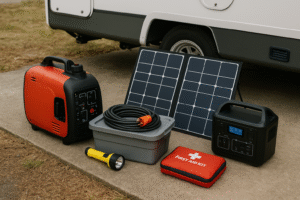
Storms, power outages, and unexpected electrical failures are part of RV life—especially in Florida, where coastal weather can change quickly. For guests at Meadowlark Shores RV Resort, having a well-planned RV emergency power kit ensures comfort, safety, and preparedness during blackouts or severe weather events. Building a reliable kit doesn’t need to be complicated—you just need the right tools, backup power sources, and essential supplies.
The first step in creating an emergency power kit is choosing your primary backup power source. Many RVers rely on a portable generator, typically between 2,000 and 4,500 watts. In an outage, a generator can run your refrigerator, lights, fans, chargers, and even one air conditioner. Look for inverter generators, which are quieter and safer for electronics—important when staying close to neighbors in a resort environment.
Fuel storage matters just as much as the generator itself. Store fuel in approved containers, keep it stabilized, and maintain at least a two-day supply during hurricane season. For propane-powered generators, ensure you have extra tanks and that your regulator is functioning properly. Keeping fuel dry and secure prevents contamination and guarantees your generator will start when needed.
Solar panels also play an important role in an emergency kit. Even a portable 100–200 watt folding solar panel paired with a lithium or AGM battery can provide essential power during extended outages. Solar keeps batteries topped up and reduces generator runtime—an advantage when fuel becomes limited or weather conditions last several days.
Every emergency power kit needs a battery backup strategy. Fully charge your RV’s house batteries before a storm arrives. If you have lithium batteries, they’ll maintain voltage longer and deliver more usable capacity during emergencies. Add a battery monitor so you always know your remaining charge and can conserve power accordingly.
Inverters also deserve attention. A small 300–1,000 watt standalone inverter is useful for running laptops, charging phones, and powering small medical devices without running the entire RV inverter system. This prevents unnecessary battery drain and avoids activating high-draw circuits you don’t need.
One of the most overlooked components of an emergency kit is extension cords and adapters. Have heavy-duty outdoor cords, dogbone adapters (30A⇄50A), USB power banks, and 12-volt adapters ready. If your generator fails or the pedestal loses power, these tools allow you to distribute electricity safely and efficiently where it’s needed most.
Lighting should also be included. Battery-powered lanterns, headlamps, and LED puck lights provide dependable illumination without draining your RV batteries. Avoid using your RV’s ceiling lights during long outages—they pull more power than most people realize.
Communication equipment is another must-have. Keep a weather radio, fully charged cell-phone power banks, and optional walkie-talkies stored with your emergency kit. If cell towers go down temporarily, having multiple communication tools ensures you can receive updates or call for help.
A surge protector or EMS system becomes even more important during storms. After a blackout, power may return unstable or with voltage fluctuations. An EMS protects your RV from dangerous surges that can destroy refrigerators, converters, and air conditioners. Never plug back into shore power after a storm without verifying safe voltage first.
It’s also wise to prepare a manual refrigeration plan. Keep coolers, ice packs, and freezer blocks ready. During a prolonged outage, running the RV refrigerator on a generator intermittently helps preserve food while conserving fuel. Keeping the refrigerator door closed as much as possible significantly extends its cooling time.
Finally, organize your emergency power kit in one accessible storage bin. Include clear labels, laminated instructions for generator startup, breaker reset procedures, and phone numbers for local emergency services. When a blackout happens, you’ll be able to act instantly—not scramble for scattered tools and equipment.
With the right preparation, an RV emergency power kit can turn a stressful blackout or storm into a manageable situation. For long-term guests at Meadowlark Shores RV Resort, this kit ensures comfort, safety, and peace of mind—no matter what Florida weather brings.
📍 4513 St Rd 46, Mims, FL
For any questions or concerns please reach out to us
📞 (321) 269-7361