

RV Hitch Pin Safety: Failure Points, Wear Patterns & Inspection Tips
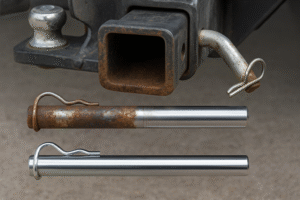
The humble hitch pin may look simple, but it is one of the most critical safety components in your entire towing setup. Whether you’re hauling a travel trailer across Florida or backing into your site at Meadowlark Shores RV Resort, a compromised hitch pin can lead to trailer separation, bent hardware, or catastrophic damage. Understanding hitch pin failure points, wear patterns, and proper inspection techniques helps RVers tow with confidence and prevent dangerous on-road incidents.
Hitch pins are designed to lock your ball mount or weight-distribution shank securely in place. Although the steel construction appears rugged, hitch pins face tremendous forces—both lateral and vertical—especially when towing on uneven roads or during hard braking. Over time, these forces cause subtle wear that weakens the pin long before it actually breaks.
One of the most common failure points is bending stress. When a trailer exerts heavy tongue weight or the ball mount is improperly sized for the receiver, the hitch pin becomes the fulcrum absorbing excessive load. Even slight bending indicates the pin has been stressed beyond its intended limits and must be replaced immediately.
Another failure mode is shear wear, caused by micro-movements between the pin and the walls of the receiver. As the trailer pushes and pulls during towing, friction slowly grinds away the surface of the pin. These wear spots often appear shiny, grooved, or flattened—clear signs the pin is losing structural integrity.
Corrosion also plays a major role in hitch pin degradation. Florida’s humid and coastal environment accelerates rust, especially when road moisture, salt, or rainwater collects inside the receiver tube. Rust weakens pins from the inside out, creating hidden soft spots that can fail suddenly under load.
Locking hitch pins require additional attention. While many RVers prefer them for theft prevention, locking barrels and key mechanisms are vulnerable to internal corrosion. A seized lock can prevent the pin from seating fully or cause it to disengage unexpectedly. Regular lubrication and inspection are essential.
Another overlooked issue is pin misalignment. If the ball mount is not perfectly positioned or if debris inside the receiver tube prevents full insertion, the pin may only partially engage the mount. This partial engagement dramatically increases shear forces and is one of the leading causes of spontaneous trailer separation.
Wear patterns are a valuable diagnostic tool. Horizontal flattening suggests excessive sway or side-to-side motion. Vertical grooving often indicates bouncing or improper load distribution. Uneven wear between the front and back sides of the pin may reveal a bent shank or misaligned receiver.
Proper inspection begins by removing the pin completely—not just looking at the exposed ends. Clean the entire surface and look for pitting, rust flakes, bending, shiny metal spots, or thinning areas. If the pin shows any deformation or deep scoring, it should be replaced. Hitch pins are inexpensive; trailers are not.
The receiver tube should be inspected as well. Wear inside the tube can cause slop that increases stress on the pin. A loose fit between the shank and receiver accelerates wear and reduces towing stability. Anti-rattle devices help minimize this movement and extend pin life.
It’s also important to choose the right pin for your setup. Undersized or lightweight pins cannot withstand the forces produced by a heavy travel trailer. Always use hardened steel pins rated for towing, not generic hardware-store pins. For weight-distribution hitches, ensure the pin meets the manufacturer’s required strength rating.
Finally, consistent inspection is key. RVers should examine their hitch pin before every towing trip, after traveling rough roads, and at regular intervals throughout the year. For long-term seasonal guests at Meadowlark Shores, inspecting the pin before arrival and departure ensures safe towing during both travel days.
Hitch pin safety may seem small, but it carries big consequences. By understanding failure points, recognizing wear patterns, and performing simple inspections, RVers can tow safely, avoid costly accidents, and enjoy peace of mind throughout their travels.
📍 4513 St Rd 46, Mims, FL
For any questions or concerns please reach out to us
📞 (321) 269-7361