

Understanding RV Construction Types: Stick-and-Tin vs. Fiberglass vs. Azdel
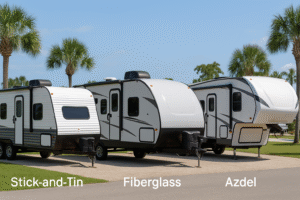
Choosing the right RV involves more than floorplans and features—construction materials play a major role in durability, insulation, maintenance, and long-term value. For guests traveling to or staying at Cape Kennedy RV Resort, understanding these materials can help ensure comfort in Florida’s coastal climate, where humidity, heat, and salt air can impact different RV builds. Three of the most common construction types are stick-and-tin, fiberglass, and the newer Azdel composite. Each offers distinct advantages depending on how and where you camp.
Stick-and-tin RVs are built with a wood frame covered by corrugated aluminum siding. This classic construction method has been around for decades and remains popular because it’s cost-effective, flexible, and easy to repair. Wood framing is surprisingly strong, and aluminum siding makes dent repairs relatively simple. However, wood can absorb moisture over time, which may lead to rot or warping if leaks develop. In Florida’s humid environment, keeping up with seal maintenance is especially important for long-term stick-and-tin owners.
One benefit of stick-and-tin construction is its natural breathability. Unlike laminated RVs, these units often handle temperature swings well because the air pockets in the frame allow some natural ventilation. For travelers staying in warm coastal areas like the Space Coast, proper airflow can help reduce interior humidity. On the downside, aluminum siding conducts heat, making insulation levels vary widely depending on the manufacturer. Some owners may find it harder to keep cool air inside on hot days.
Fiberglass RVs use laminated sidewalls made from fiberglass panels vacuum-bonded or pinch-rolled onto a foam-insulated substrate. This creates a solid, smooth exterior that many owners prefer for aesthetic and aerodynamic reasons. Fiberglass tends to hold up better against wind, heat, and road debris compared to aluminum siding. It also resists dents and provides a more upscale appearance, which is why many higher-end travel trailers and motorhomes use fiberglass exteriors.
The biggest risk with fiberglass RVs is delamination. When water penetrates a seam or roofline, it can compromise the glue holding the layers together. Over time, this causes bubbling or separation of the wall layers, which is expensive to repair. This makes seal inspections crucial, especially when traveling through Florida’s heavy rain and coastal humidity. Still, when properly maintained, fiberglass RVs tend to offer excellent longevity and thermal efficiency.
Fiberglass construction also offers better insulation performance thanks to its laminated foam core. This helps keep RV interiors cooler during the warm months at Cape Kennedy RV Resort. Laminated walls are also generally quieter, providing better sound dampening against highway noise or nearby campers. Many owners appreciate the solid, residential feel of fiberglass units.
Azdel construction represents one of the most innovative advances in the RV industry. Azdel is a lightweight composite panel made from polypropylene and fiberglass fibers. It replaces traditional Lauan wood panels in laminated RVs, offering major benefits in durability, weight, insulation, and resistance to moisture. Because Azdel is waterproof, it cannot rot, mold, or absorb water—addressing one of the biggest weaknesses in standard fiberglass RV construction.
RV manufacturers that use Azdel often pair it with fiberglass exterior walls, creating a structure that is both strong and highly resistant to delamination. While leaks can still occur, the Azdel panels prevent water from wicking through the walls and causing structural failure. This makes Azdel-based RVs especially well-suited for humid or coastal climates like Florida’s Space Coast.
Another advantage of Azdel is its weight savings. Because the material is lighter than wood, RVs built with Azdel often have improved fuel economy and better towing stability. The material also provides superior sound insulation and thermal resistance, helping maintain interior comfort during Florida heatwaves. Many RVers who plan long-term travel or full-time living specifically seek Azdel-based units for these advantages.
In terms of maintenance, Azdel RVs require less frequent inspection of interior paneling because moisture cannot damage the composite. Owners still need to maintain roof and exterior seals, but the risk of hidden water damage is significantly lower. This peace of mind is appealing for seasonal travelers who store their RV for long stretches between visits to Cape Kennedy.
Price is often the deciding factor between these construction types. Stick-and-tin RVs are typically the most affordable and easiest to repair, making them a great choice for budget-conscious travelers. Fiberglass RVs cost more upfront but offer a strong balance of durability and aesthetics. Azdel RVs tend to command higher prices, reflecting their long-term value, reduced maintenance needs, and superior performance in demanding climates.
Ultimately, the best RV construction type depends on how frequently you travel, where you camp, and how much maintenance you’re willing to perform. Whether you’re exploring Florida’s Space Coast, enjoying rocket launches from your site, or spending a season at Cape Kennedy RV Resort, understanding construction materials helps ensure your RV stays comfortable, durable, and ready for adventure.
📍 4513 St Rd 46, Mims, FL
For any questions or concerns please reach out to us
📞 (321) 269-7361