

RV Transmission Overheating: Causes, Warning Signs & Prevention
Your RV’s transmission is one of the hardest-working components of the entire drivetrain. It manages power from the engine, keeps your rig moving smoothly, and handles massive forces—especially on long trips or while towing. When transmission temperatures rise too high, performance drops fast and expensive repairs follow. For RVers traveling to or staying at Cape Kennedy RV Resort, understanding transmission overheating is essential for safe, reliable travel across Florida’s hot, humid climate.
Transmission overheating occurs when internal fluid temperature exceeds the safe operating range—usually around 200–220°F for most RVs. Above this threshold, transmission fluid begins to break down, losing its lubricating and cooling properties. Over time, overheated fluid damages seals, clutches, torque converters, and internal gears. Even minor overheating events shorten the lifespan of your transmission, and repeated overheating can cause complete failure.
One of the most common causes of overheating is heavy loads. Large Class A motorhomes, fifth wheels, and towable rigs place enormous strain on the engine and transmission—especially when climbing bridges, accelerating onto highways, or maneuvering through traffic. When towing in Florida’s hot weather, transmissions are already working harder, making overheating more likely.
Driving habits also contribute. Excessive braking, riding the gas pedal, and frequent stop-and-go driving force the transmission to shift constantly, creating more heat. Even cruising at high speeds with an overloaded RV or towing vehicle can force the transmission to operate above safe temperatures. Florida’s flat terrain may seem easy on transmissions, but heat and humidity amplify internal temperatures regardless of road grade.
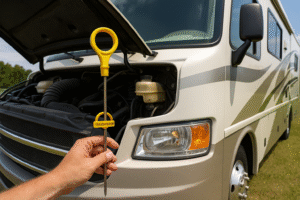
Low or degraded transmission fluid is another major cause. Transmission fluid cools, lubricates, and provides hydraulic pressure. When fluid levels are low—or the fluid hasn’t been changed in years—the transmission can’t dissipate heat properly. Dark, burnt-smelling fluid is a strong indicator that overheating has already occurred.
Poor airflow can make overheating worse. Radiators, transmission coolers, and cooling lines must have strong, unobstructed airflow to shed heat. If bugs, debris, or corrosion block these areas, temperatures rise quickly. RVers traveling near the coast may also see salt buildup affecting metal components and airflow efficiency.
Warning signs of overheating often start subtle. A burning smell is one of the earliest and most common indicators. It usually means transmission fluid is breaking down under heat. Another clue is slipping gears—when the engine revs but the RV doesn’t accelerate as expected. This occurs when overheated fluid can no longer create necessary hydraulic pressure.
Harsh or delayed shifting is another red flag. The transmission may hesitate, slam into gear, or shift unpredictably when fluid temperatures rise. In some motorhomes and tow vehicles, the transmission temperature light may flicker or illuminate, indicating immediate action is needed to prevent permanent damage.
In more severe cases, the RV may go into limp mode, limiting speed and acceleration to protect the transmission from further harm. While this safety feature prevents catastrophic failure, it also signals a major overheating problem that must be addressed before continuing your trip.
Preventing transmission overheating starts with regular maintenance. Check fluid levels often and follow the manufacturer’s change intervals—especially if the RV tows heavy loads. Installing an auxiliary transmission cooler is one of the most effective upgrades for RVers who travel frequently or tow large rigs. Coolers help dissipate excess heat, giving the transmission much-needed support.
Driving habits matter too. Downshift on bridges or inclines instead of forcing the transmission to hunt for gears. Avoid towing in overdrive unless your manual specifically recommends it. Give your RV time to cool after long stretches, and never ignore transmission temperature warnings.
Even campsite choices matter. Parking on level ground at Cape Kennedy RV Resort helps reduce strain when maneuvering or backing into position. After arrival, let the engine idle for a minute before shutting off to allow temperatures to stabilize.
Transmission overheating is one of the most preventable causes of RV drivetrain failure. With mindful driving, proper maintenance, and awareness of early warning signs, RVers can protect their rigs from costly repairs and ensure smooth travels across the Space Coast and beyond. A healthy transmission keeps your adventures safer, easier, and far more enjoyable.
📍 4513 St Rd 46, Mims, FL
For any questions or concerns please reach out to us
📞 (321) 269-7361