

Your RV Roof Materials Explained: EPDM, TPO, Fiberglass, and Aluminum
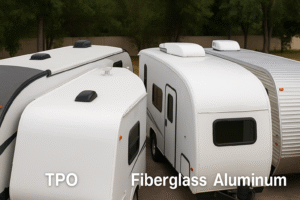
Your RV roof is one of the most important components of your entire rig, protecting it from rain, UV exposure, falling debris, and years of travel. But not all RV roofs are built the same. Understanding the differences between EPDM, TPO, fiberglass, and aluminum can help RV owners make smarter decisions about maintenance, repairs, and long-term durability—especially when camping in Florida’s coastal climate near Cape Kennedy RV Resort.
EPDM (Ethylene Propylene Diene Monomer) is one of the most common RV roof materials. This synthetic rubber membrane is known for flexibility, impact resistance, and long lifespan. EPDM handles temperature swings well, making it ideal for hot environments. It resists cracking and absorbs heat instead of reflecting it. However, EPDM’s dark color means it gets warmer than other materials, and it can develop chalky residue over time. Regular cleaning and UV protectant help extend its life.
TPO (Thermoplastic Polyolefin) is another popular membrane roof option. Unlike EPDM, TPO is usually bright white, providing excellent UV reflectivity and energy efficiency. This makes it especially beneficial in Florida, where keeping interior temperatures low reduces air-conditioning strain. TPO is lighter and more rigid than EPDM, which helps with puncture resistance but makes it slightly more brittle over time. Periodic inspection of seams is essential to prevent leaks.
Both EPDM and TPO are considered “rubber roofs,” but they behave differently. EPDM is glued down and typically uses lap sealant around edges and fixtures. TPO often uses heat-welded seams, which can last longer when properly installed. Owners should know which material they have to choose correct cleaners—using the wrong chemical can damage the membrane.
Fiberglass roofs are found on many high-end motorhomes and some travel trailers. These roofs are molded into a seamless shell, offering exceptional durability and resistance to punctures. Fiberglass is strong, smooth, and visually appealing, with a glossy finish that adds a premium look. It resists UV radiation well but can oxidize or fade without regular waxing. Because fiberglass is rigid, it’s less likely to tear—but if damaged, repairs tend to be more costly.
Another advantage of fiberglass is structural stability. The solid shell design helps prevent leaks because there are fewer seams and joints. This is ideal for Florida’s heavy rain, high humidity, and salt air. However, fiberglass roofs can be slippery when wet, so caution is required when performing rooftop maintenance.
Aluminum roofs are less common today but were standard on many vintage RVs and are still used on some custom or high-end models. Aluminum roofs offer exceptional longevity and resistance to UV damage. They do not rot or degrade like rubber membranes and can last the entire lifetime of an RV. They also resist punctures well and reflect heat effectively.
However, aluminum roofs can dent easily from hail or falling branches. They also have more seams than fiberglass, which means more maintenance to prevent leaks. Sealant must be monitored regularly to ensure the roof remains watertight. For RVers who enjoy long-term stays at Cape Kennedy, aluminum roofs can withstand coastal conditions exceptionally well with the right care.
Choosing the best roof type often depends on budget, climate, and the kind of RV you own. Membrane roofs (EPDM and TPO) are lightweight, affordable, and reliable when properly maintained. Fiberglass offers top-tier durability and aesthetics, while aluminum provides excellent longevity for the right owner.
No matter which roof material your RV uses, regular inspections are critical. Check seals around vents, skylights, antennas, and edges. Florida’s sun and humidity can accelerate sealant wear, so conditioning and resealing every 6–12 months is essential. A small crack missed today can become a major leak tomorrow.
Keeping your roof clean prevents mold, mildew, and breakdown of protective coatings. Use membrane-safe cleaners for EPDM and TPO, and avoid harsh chemicals that can weaken adhesives. Fiberglass roofs benefit from UV wax, while aluminum roofs require ongoing seam care.
Understanding your RV roof material helps you protect your investment and avoid costly repairs. Whether your roof is rubber, fiberglass, or metal, proper maintenance ensures your RV remains comfortable, leak-free, and ready for every adventure on Florida’s beautiful Space Coast.
📍 4513 St Rd 46, Mims, FL
For any questions or concerns please reach out to us
📞 (321) 269-7361