

Understanding Shore Power: Pedestal Anatomy & Common Wiring Flaws
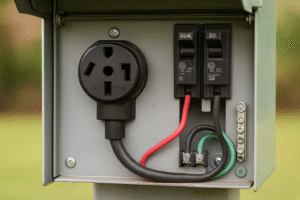
For many RVers staying at Meadowlark Shores RV Resort, plugging into shore power feels simple—just connect the cord and turn on the AC. But behind that convenience is a complex electrical system inside the campground pedestal. Understanding how shore power works, what each component does, and which wiring flaws are most common helps RVers protect their rigs from damage, breaker trips, or dangerous electrical faults.
A standard RV pedestal delivers 30-amp or 50-amp service through outlets designed specifically for RV use. The 30-amp outlet provides 120 volts on a single hot leg, while the 50-amp outlet provides two separate 120-volt legs, effectively supplying up to four times more usable wattage. Both rely on correct voltage, grounding, and wiring integrity to function safely.
Inside each pedestal, three primary wires carry the electrical load: hot, neutral, and ground. The hot wire delivers voltage, the neutral returns current, and the ground provides a safety path in case of faults. If any of these connections are loose, corroded, or miswired, it can create issues ranging from minor flickering to catastrophic appliance failure.
One of the most common wiring flaws is a loose neutral connection. While a loose hot wire may simply cause intermittent power loss, a loose neutral can create severe voltage swings—sometimes pushing one RV circuit above 150 volts while starving another. High voltage can instantly destroy air conditioners, microwaves, converters, and sensitive electronics.
Another frequent issue involves corroded or overheated terminals inside the pedestal. Florida’s humidity and coastal air accelerate corrosion, weakening connections and raising resistance. High-resistance connections generate heat, which can melt plugs, cause arcing, or trip breakers repeatedly. RVers often think their rig is the problem when the pedestal is actually the culprit.
Incorrectly wired pedestals also appear more often than RVers realize. Miswired grounds and neutrals, reversed hot and neutral, or missing grounds all pose significant safety hazards. These flaws often occur when older pedestals are repaired, replaced, or modified by someone unfamiliar with RV electrical systems.
Low voltage is another major concern. During peak usage—such as warm winter afternoons when many RVers run air conditioning—voltage can drop below safe levels. At 105 volts or lower, motors overheat and compressors struggle, dramatically shortening their lifespan. An EMS (Electrical Management System) is essential protection against this scenario.
High voltage, while less common, can occur during wiring faults or utility fluctuations. When voltage exceeds safe limits, an EMS will disconnect power before it reaches your RV. Without protection, appliances may burn out instantly.
Pedestal breakers also play a vital role. They are designed to trip when overloaded, preventing wires from overheating. But if breakers become old, corroded, or weakened, they may fail to trip at all, allowing unsafe current levels. Regular campground maintenance mitigates this risk, but RVers should still use equipment that monitors amperage and voltage.
Understanding the pedestal’s role helps RVers diagnose problems more quickly. If an air conditioner won’t start, lights flicker, or breakers trip repeatedly, the issue might not be in your RV at all. Checking voltage at the pedestal with a handheld tester or relying on an EMS display can help identify the source instantly.
Proper cord connection also matters. A loose plug creates heat due to arcing, which can melt both the pedestal outlet and your RV plug. Ensuring the plug fits firmly, using dielectric grease on prongs, and avoiding partially inserted plugs prevents damage and improves longevity.
Ultimately, shore power safety comes down to awareness and protection. For long-term guests at Meadowlark Shores RV Resort, understanding pedestal anatomy and common wiring flaws empowers RVers to safeguard their rigs, avoid unexpected outages, and enjoy reliable power all season long. With the right knowledge and equipment, your electrical system stays safe, stable, and ready for every Florida adventure.
📍 4513 St Rd 46, Mims, FL
For any questions or concerns please reach out to us
📞 (321) 269-7361