

How to Spot Early Signs of Bent Axles Before They Fail
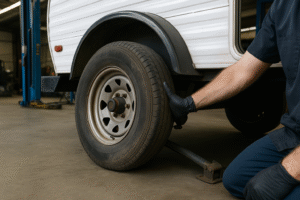
A bent axle is one of the most dangerous and expensive trailer problems an RVer can face. What starts as a subtle handling change can quickly turn into tire blowouts, suspension damage, or complete axle failure. For guests traveling to or from Meadowlark Shores RV Resort, knowing how to spot the early signs of a bent axle can prevent roadside breakdowns and costly repairs.
The first and most common early indicator is uneven tire wear. A healthy axle keeps tires flat and evenly loaded. But when an axle bends, the tires begin to lean inward or outward, creating camber issues. This misalignment rapidly wears down the inside or outside edge of the tread. If one tire is bald on one edge while the other looks normal, a bent axle is a top suspect.
Another early sign is a noticeable change in how the trailer tows. Drivers often report a drifting sensation, excessive sway, or the trailer feeling “loose” behind the tow vehicle. Because a bent axle changes the tracking angle of the wheels, the trailer no longer follows perfectly straight. Even slight misalignment causes instability at higher speeds.
A bent axle also affects the ride height of the trailer. If one side of the RV sits lower than the other—or if a single wheel appears tucked higher into the wheel well—that’s a strong visual clue. This shift occurs because the axle bow or spindle angle has changed, altering how weight is distributed across the suspension.
RVers may also hear new sounds coming from the suspension, such as clunks, scraping, or rhythmic rubbing. When a wheel is misaligned due to a bent axle, the tire may contact the frame, fender skirt, or brake components. These noises typically grow worse on turns or uneven pavement.
Another key indicator is excessive heat at the hubs. A bent axle changes the load distribution on the bearings, causing them to overheat and wear prematurely. After a long drive, if one hub cap is noticeably hotter than the others, it may point to a misaligned or stressed spindle.
A visual inspection beneath the trailer can also reveal subtle clues. Look for any bowing of the axle tube, uneven spring hangers, or a spindle that doesn’t appear perfectly horizontal. While slight axle camber is normal, asymmetry between the left and right sides is not.
Another overlooked sign is changes in brake performance. Misalignment can cause brake shoes or pads to make uneven contact, resulting in grabbing, pulling, or delayed braking response. If your electric brakes suddenly feel inconsistent or require frequent adjustment, a bent axle could be the hidden cause.
Weight-related signs also matter. If your trailer consistently feels overloaded on one side—or if that side experiences more frequent blowouts—it may not be an actual weight issue, but rather a bent axle shifting the load improperly. Even moderate axle deformation dramatically affects weight distribution.
Sometimes the first noticeable clue is increased fuel consumption. A trailer with poor alignment creates additional drag, forcing the tow vehicle to work harder at highway speeds. If fuel efficiency suddenly drops without explanation, wheel alignment and axle condition should be checked.
Bent axles often result from curb strikes, potholes, tight campground turns, or overloading. Florida’s heat and humidity also accelerate metal fatigue, making it even more important for long-term seasonal guests to inspect their axles regularly.
Regular maintenance and early detection are key. Inspect tires visually every travel day, check ride height monthly, and use an infrared thermometer to detect unusual hub temperatures. These quick checks help RVers identify issues before the axle reaches the point of failure.
Spotting bent axle symptoms early can prevent catastrophic breakdowns, save hundreds in tire replacement, and keep your travels safe. For visitors heading to Meadowlark Shores RV Resort, understanding these warning signs ensures smoother towing and greater peace of mind throughout your journey.
📍 4513 St Rd 46, Mims, FL
For any questions or concerns please reach out to us
📞 (321) 269-7361